

Imagine this scenario: It’s 2:00 AM on a Tuesday. A supply line to a breakroom sink bursts. Water silently floods your commercial space for six hours until the first employee unlocks the door at 8:00 AM.
To the untrained eye, the floor just looks wet. You might think, “Can’t we just mop this up and put some fans on it?”
But to a restoration expert, that floor is already screaming for help. As a business owner, you calculate risks every day. But are you aware that the difference between a simple cleanup bill and a massive renovation cost often comes down to a single, narrow window of time?
We call it The 4-Hour Rule.
Why is the Clock Your Enemy?
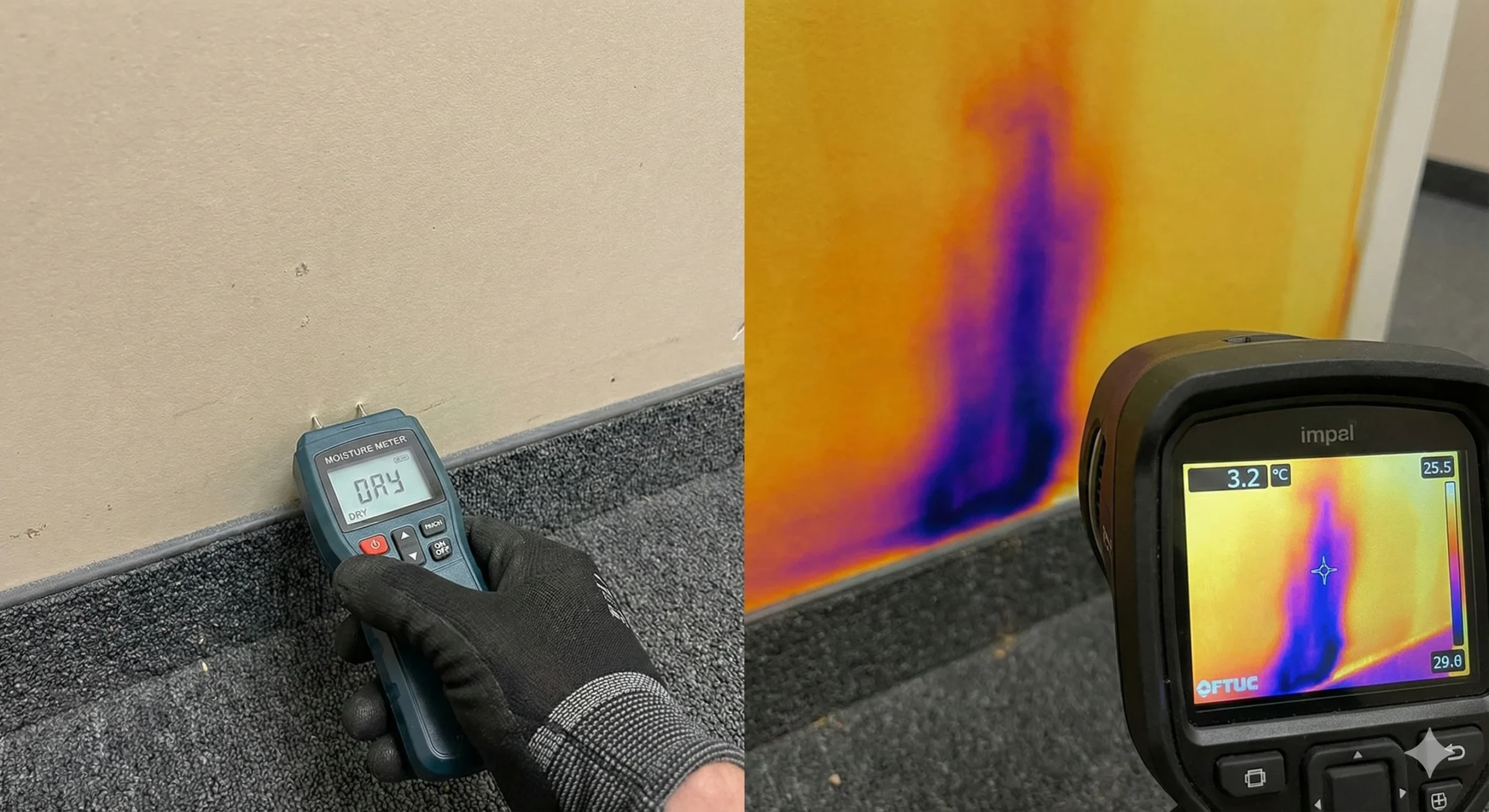
Water is deceptive. It doesn’t just sit on top of your floors; it migrates. Have you ever wondered why a spill seems to vanish, only for the floorboards to buckle or the carpet tiles to lift a few days later?
Commercial flooring is engineered for heavy foot traffic, not submersion. When water intrudes, it immediately seeks the path of least resistance.
The “Wicking” Phenomenon
Within the first 60 minutes, water begins to “wick” up vertical surfaces like drywall and seep deep into the subfloor. However, the critical chemical breakdown happens at the 4-hour mark.
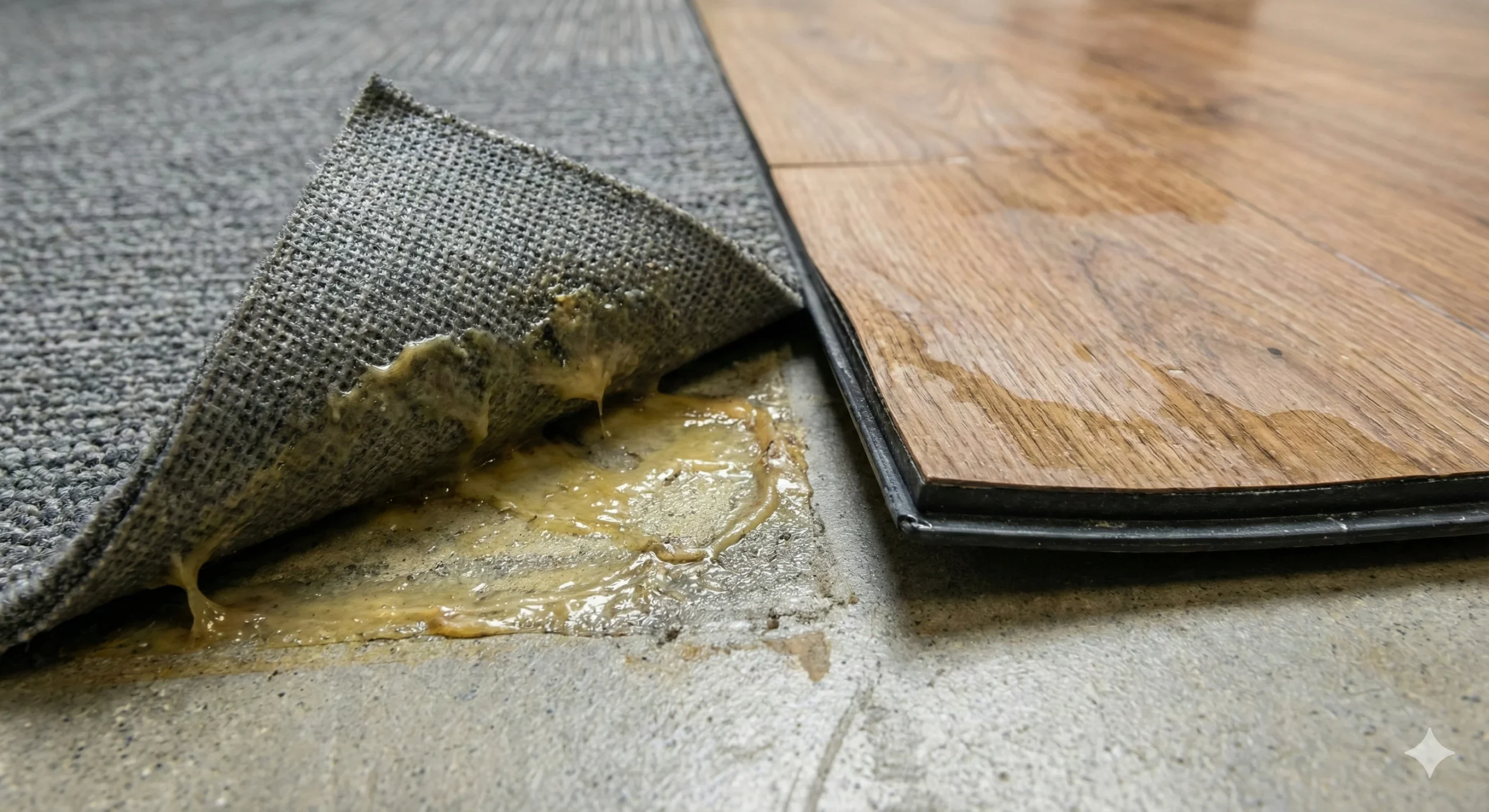
- Adhesive Breakdown: Most commercial carpet tiles and vinyl planks use water-based adhesives. After 4 hours of saturation, the glue begins to re-emulsify. The result? Bubbling, shifting, and permanent detachment.
- Cellular Collapse: Hardwood or laminate planks begin to absorb moisture into their cellular structure, causing them to swell, cup, and crown.
- Mold Activation: While visible mold takes 24-48 hours to appear, the conditions for mold growth are established within hours of standing water.
The Financial Reality: Restoration vs. Replacement
Why should this timeline matter to your P&L statement?
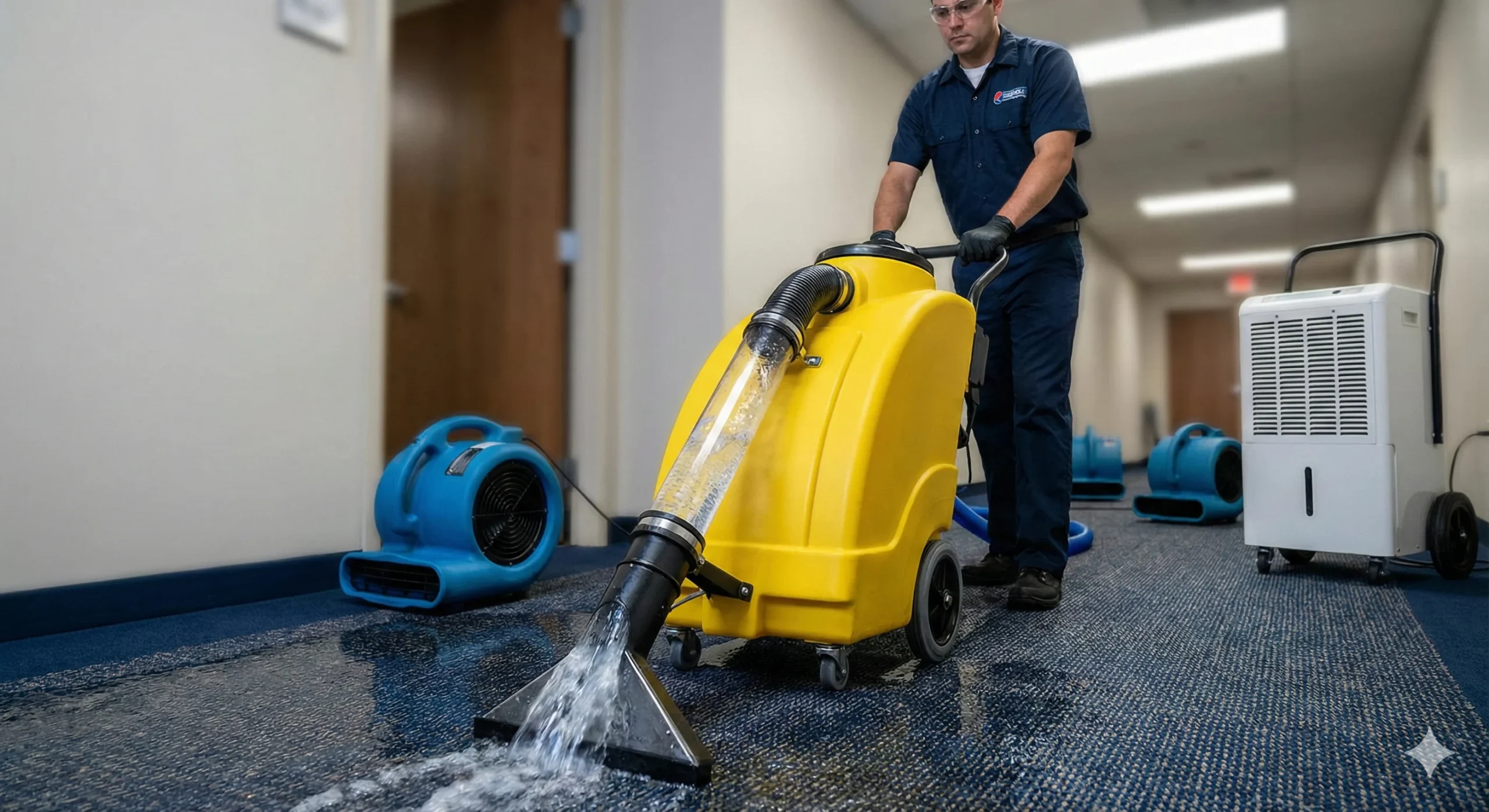
If you call for professional water removal within that 4-hour window, the process is typically extraction and drying. This is a restoration cost fast and relatively affordable.
(Article continues on the original site with cost comparisons, real commercial case studies, and what happens after 4, 24, and 48 hours but the core message is clear: every hour past the 4-hour mark dramatically increases both damage and expense.)
Bottom line: In commercial water damage, time isn’t just money, it’s the difference between saving your flooring and replacing it entirely.
If you’re a business owner, facility manager, or property manager in Southern California and you’re facing water damage right now don’t wait to find out what “too late” costs.
Call APS Flood Restoration 24/7 at (844) 277-5777 or visit https://www.apsfloodrestoration.com/ for emergency response that arrives fast and works faster.
Because when water hits your business, the clock starts ticking the moment it starts dripping.
Is Your Floor at Risk?
Every minute counts. Don’t let water damage become permanent.
RESCUE MY PROPERTY NOW

